Letters
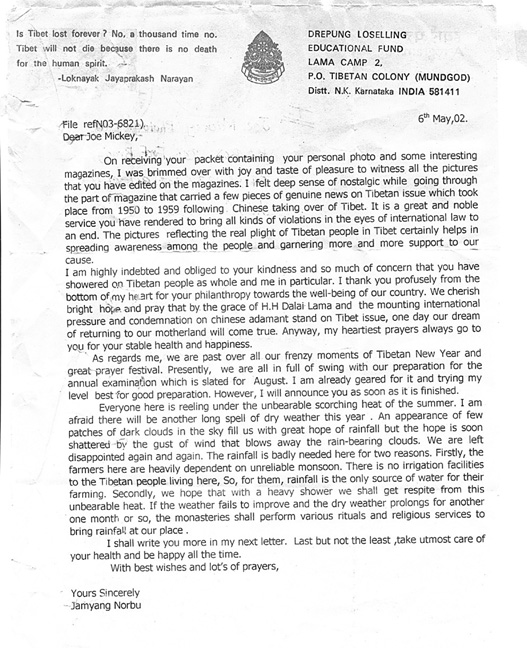
from a compassionate man living in India's season of hell
Every
summer, the population of India broils in relentless summer heat.
According to several recently published reports it is common for
a few hundred to die countrywide in a week's time from heat related
causes. Ironically, in the same year the Bush administration unilaterally
withdrew the US from the international Kyoto Global Warming treaty,
India has experienced its worst year on record. In India, summers
is the season of hell. It is normal for the summer heat to burn
above 100 degrees for months on end. According to several published
reports, the number of deaths recorded on May 15, in one southern
Indian state from record 120 degree temperatures totaled over
1000 in a single day. This concern has been brought home in a
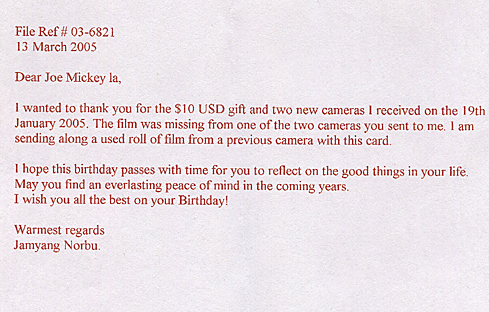
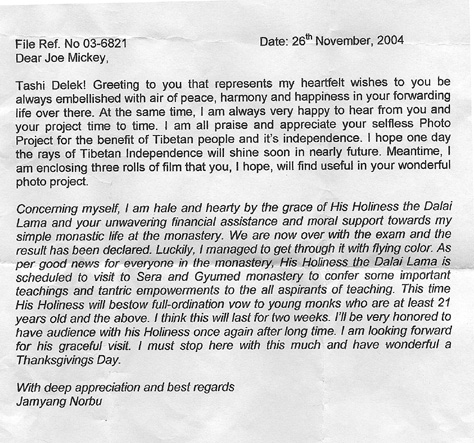
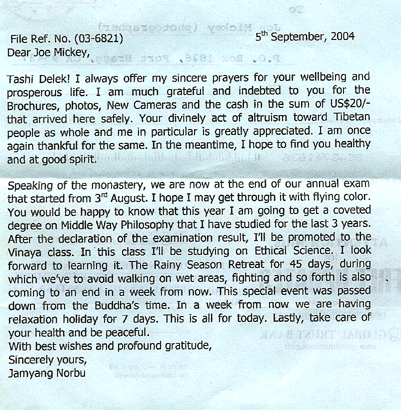
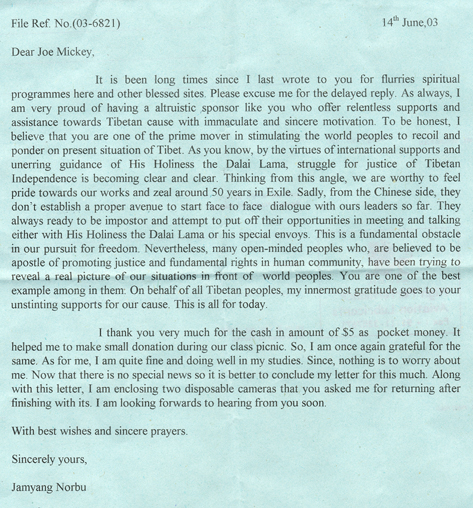
recent letter, dated May 6, from Jam Yang Norbu who lives at the
Drepung Monastery in the southern Indian state of Karnataka.
Archive Notice: The Tibetan Photo Project website contains more than two decades of historical material. Some pages are preserved as part of the project archive and may include older dates, links, projects, technology, fundraising information or references that are no longer current.
All images are Copyright 2001-2026, Joe Mickey / Estate of Joe Mickey (Connie Korbel-Mickey), and The Tibetan Photo Project and may not be published without permission.
You are welcome to print material from this site for personal reading or to share privately with friends. For feature articles, publication, educational use, exhibitions, or other public use of photographs or material from this site, please contact The Tibetan Photo Project at tibetanphoto@gmail.com.on or public use
of any of the material or images contained on this site please
contact Joe Mickey via e-mail at tibetanphoto@gmail.com and please reference your e-mail to the
Tibetan Photo Project. Thank You.
Archive Notice: The Tibetan Photo Project website contains more than two decades of historical material. Some pages are preserved as part of the project archive and may include older dates, links, projects, technology, fundraising information or references that are no longer current.





















 ............... ...............